I did not expect the first time I made this to go so well. I had a few salmon fillets in the fridge, a jar of honey on the counter, and about twenty five minutes before dinner needed to be on the table. I mixed together a quick glaze, slid the tray into the oven, and by the time I had set the table the kitchen smelled like something I would order at a restaurant.
That is the thing about a good salmon honey recipe oven dinner. It sounds impressive but it is genuinely easy. The honey caramelizes in the heat, the soy sauce adds depth, and the salmon stays moist and tender the whole way through. You do not need a lot of skill or a lot of time. You just need a reliable recipe and a warm oven.
Here at HoneyGlowKitchen.com, I am Chef Bella, and I write recipes for home cooks who love honey and want dinner to feel a little more special without spending hours in the kitchen. This salmon honey recipe oven version is one of my favorites because it works every single time, it is naturally gluten free, and it pairs with almost anything you already have at home. If you enjoy this kind of meal, you may also like honey garlic salmon and honey glazed salmon for more simple baked salmon ideas.
In this article you will find the full recipe, step by step instructions, the best temperature to use, how to adjust it for diabetics, whether you add the honey before or after cooking, and honest answers to every question people ask about baked honey salmon.
Table of Contents
Table of Contents
Key Takeaways
The salmon honey recipe oven method takes about 25 minutes from start to finish and uses just a handful of pantry ingredients.
Baking at 400 degrees Fahrenheit gives the salmon a slightly caramelized glaze while keeping the inside moist and flaky, which takes about 12 to 15 minutes depending on thickness.
Honey is added to the salmon before cooking so it can caramelize and bond with the fish during the bake.
Salmon is an excellent protein for people with diabetes because it contains omega-3 fatty acids and does not raise blood sugar the way high-carb foods do.
The internal temperature of fully cooked salmon should reach 145 degrees Fahrenheit at the thickest part before serving.
What Is Salmon Honey Recipe Oven
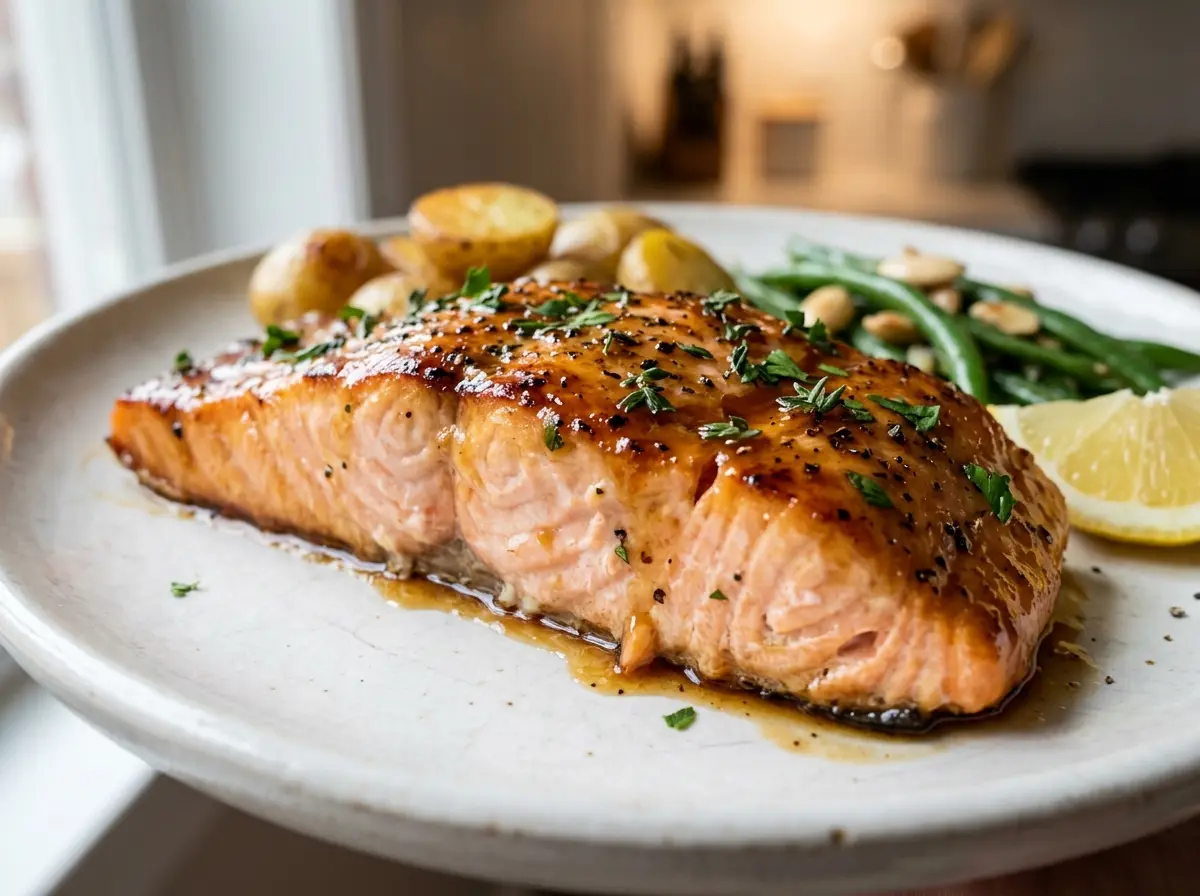
Salmon honey recipe oven is exactly what it sounds like. It is a baked salmon dish where honey plays the central role in the glaze. Most versions combine honey with soy sauce and garlic to create a sticky, sweet, and savory coating that clings to the salmon and turns golden in the oven heat. A similar flavor profile shows up in honey garlic salmon, which uses the same sweet-savory idea in a slightly different way.
What makes this recipe stand out is how the honey behaves when it bakes. At oven temperature, the natural sugars in honey caramelize and create a light crust on the surface of the fish. The inside stays soft and juicy while the outside picks up that warm, glossy finish that makes the plate look like you spent much more time on it than you did.
The recipe is naturally gluten free when you use a gluten free soy sauce or tamari, and it is dairy free as written. According to USDA research, a 3-ounce serving of raw salmon contains about 17 grams of protein, making it one of the most nutritious proteins you can add to a weeknight dinner.
This is the kind of recipe that becomes a regular in your kitchen. Simple enough to make on a Tuesday. Special enough to serve to guests on a weekend.
Ingredients for Salmon Honey Recipe Oven
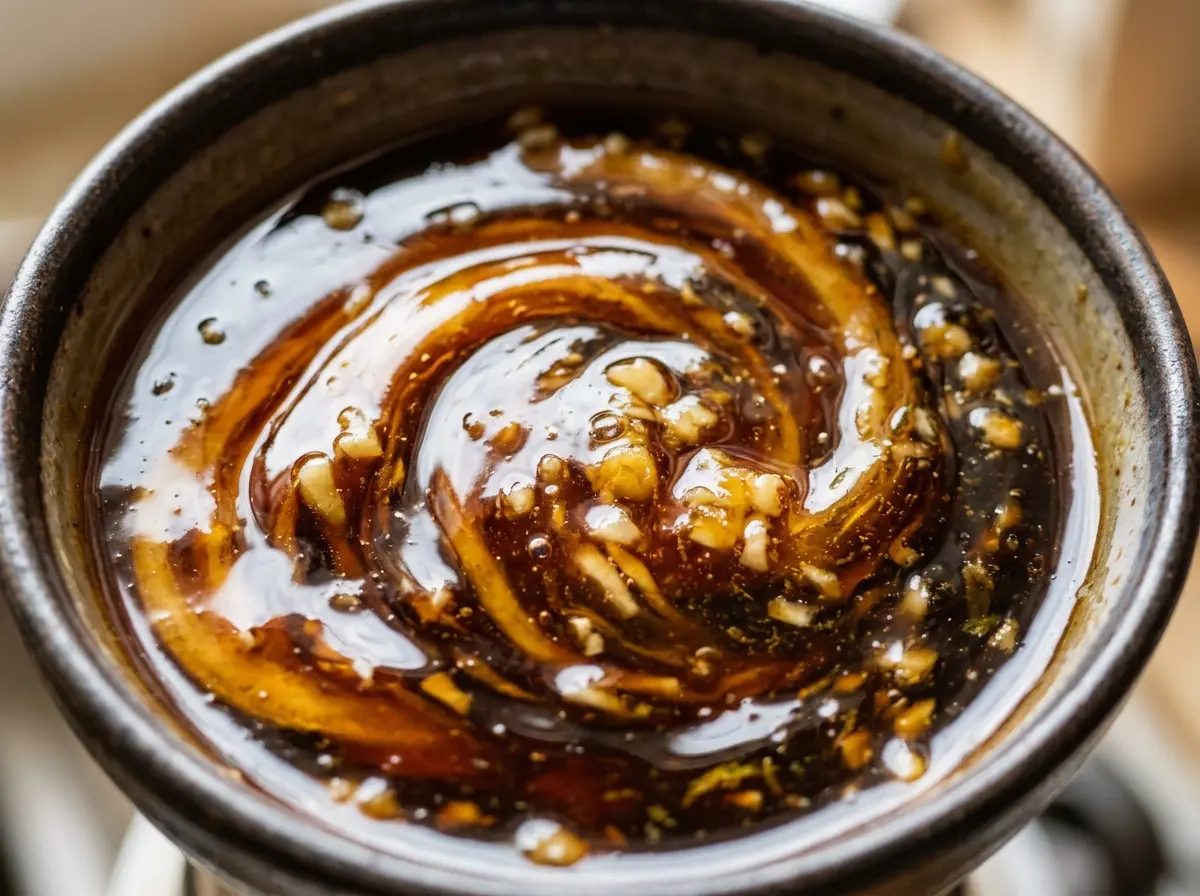
4 salmon fillets, about 6 ounces each.
2 tablespoons honey.
1 tablespoon soy sauce or tamari for gluten free.
1 tablespoon olive oil.
2 cloves garlic, minced.
1 teaspoon lemon juice.
1 quarter teaspoon black pepper.
1 pinch salt.
Optional, 1 teaspoon Dijon mustard for extra depth.
Optional, fresh parsley or green onion for serving.
Use good quality honey here because it is the main flavor in the glaze. A mild or medium honey blends best with the soy and garlic and does not overpower the salmon. If you use a very strong honey the glaze can taste unbalanced, so keep it gentle unless you have a specific preference.
For the salmon, wild caught fillets tend to have a richer flavor and firmer texture, but farmed salmon also works very well here. According to USDA Agricultural Research, a 5-ounce serving of cooked farmed Atlantic salmon provides about 290 calories and more than 1800 milligrams of omega-3 fatty acids, which makes it one of the most nutritious fish you can bake at home.
How to Make Salmon Honey Recipe Oven
Step 1: Preheat the oven
Set your oven to 400 degrees Fahrenheit and let it preheat fully before the salmon goes in. A properly preheated oven is what gives you that caramelized glaze rather than a pale, uneven surface. Line a baking tray with parchment paper so the honey glaze does not stick and cleanup stays simple. If your oven rack is too close to the top, move it to the center position so the honey does not burn before the salmon is cooked through.
Step 2: Mix the honey glaze
In a small bowl combine the honey, soy sauce, olive oil, minced garlic, lemon juice, salt, and pepper. Stir everything together until the glaze is smooth and the honey has blended fully into the other ingredients. If you are using Dijon mustard, whisk it in at this stage. The glaze should smell bright and savory with a warm sweetness underneath. Taste it before it goes on the fish. If it needs more brightness, add another small squeeze of lemon.
Step 3: Prepare the salmon
Pat the salmon fillets dry with a paper towel. Removing the surface moisture helps the glaze stick and allows the outside of the fish to caramelize rather than steam. Place the fillets skin side down on your prepared baking tray and space them slightly apart so the heat circulates evenly around each piece. Dry salmon holds glaze much better than wet salmon, and this one small step makes a noticeable difference in the finished result.
Step 4: Glaze and bake
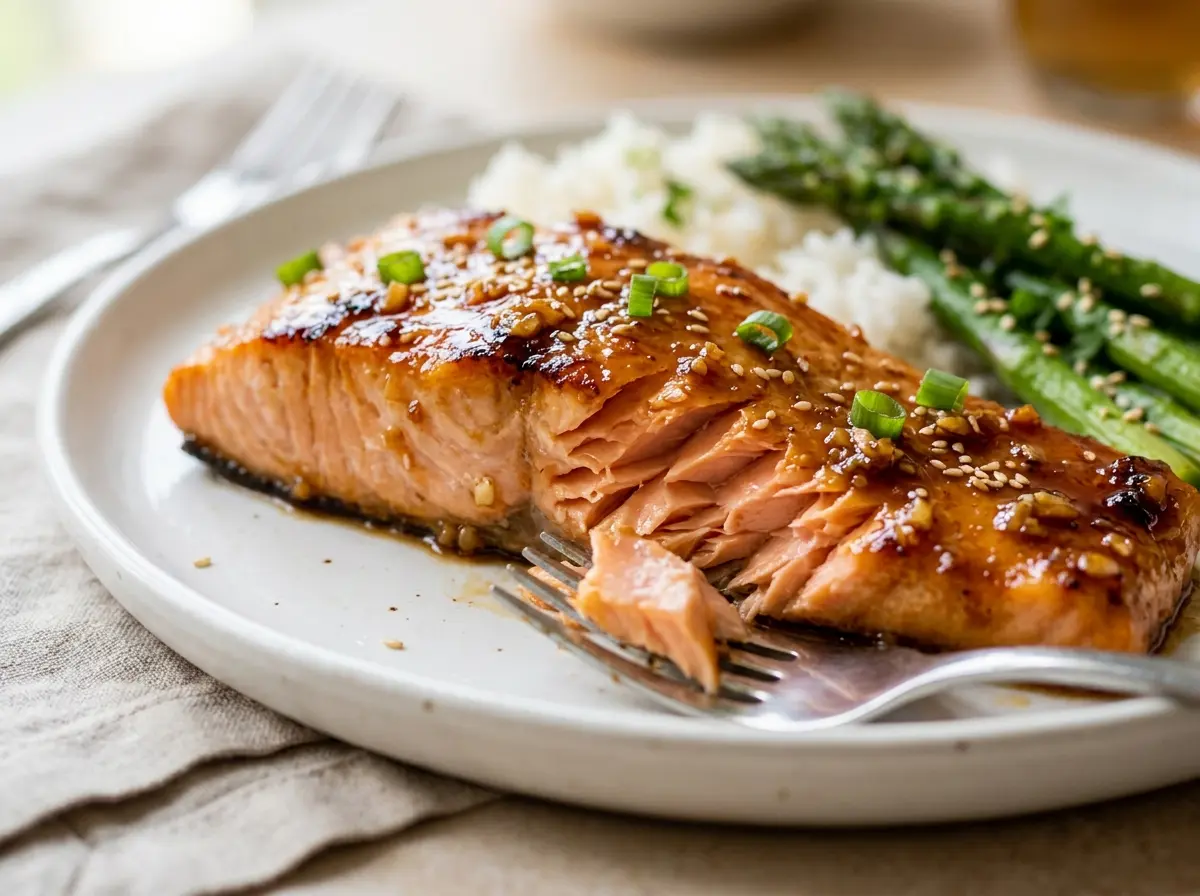
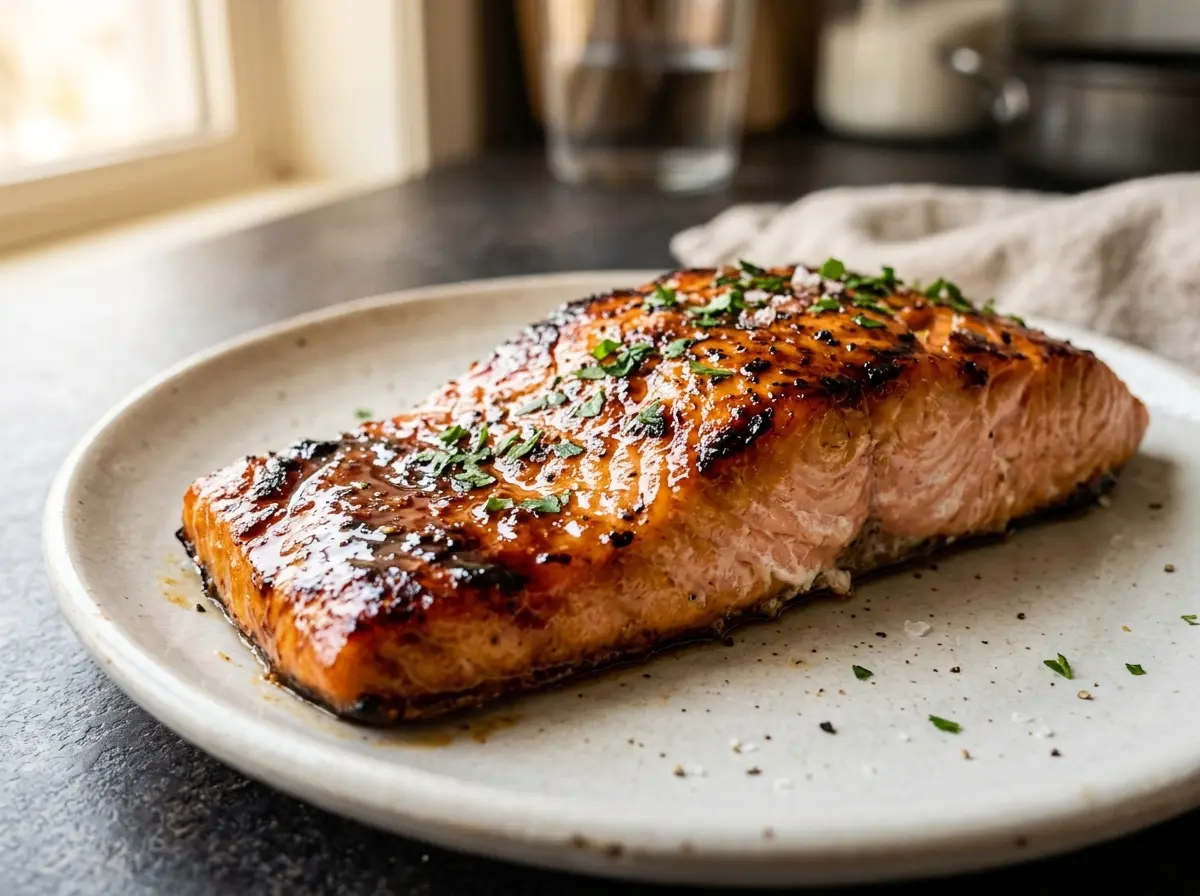
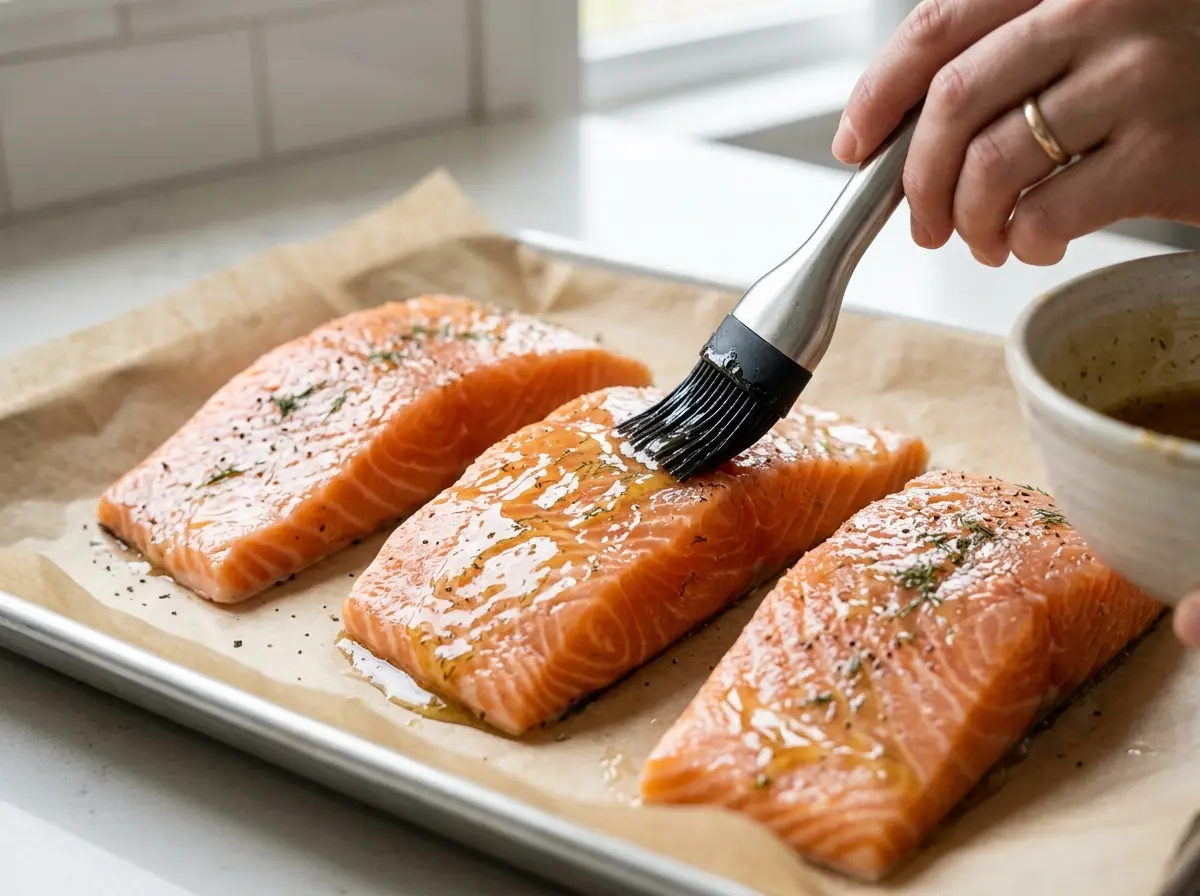
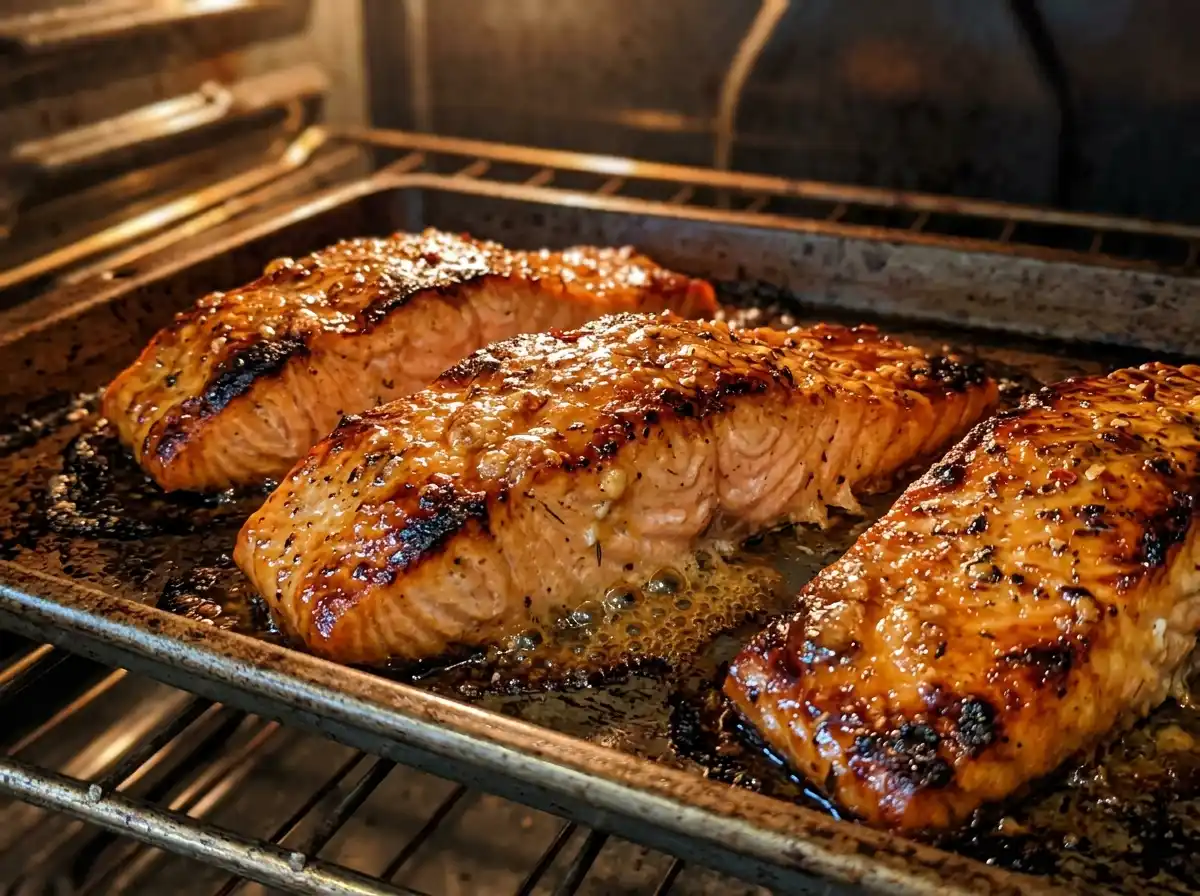
Spoon or brush the honey glaze generously over each salmon fillet, covering the entire top surface and sides. Save a small amount of glaze to add during the last two minutes of baking. Slide the tray into the center of the preheated oven and bake for 12 to 15 minutes depending on the thickness of your fillets. The salmon is ready when it flakes easily with a fork and the glaze has turned a deep golden amber color. For the most accurate result, use a meat thermometer and check that the thickest part reads 145 degrees Fahrenheit.
Step 5: Rest and serve
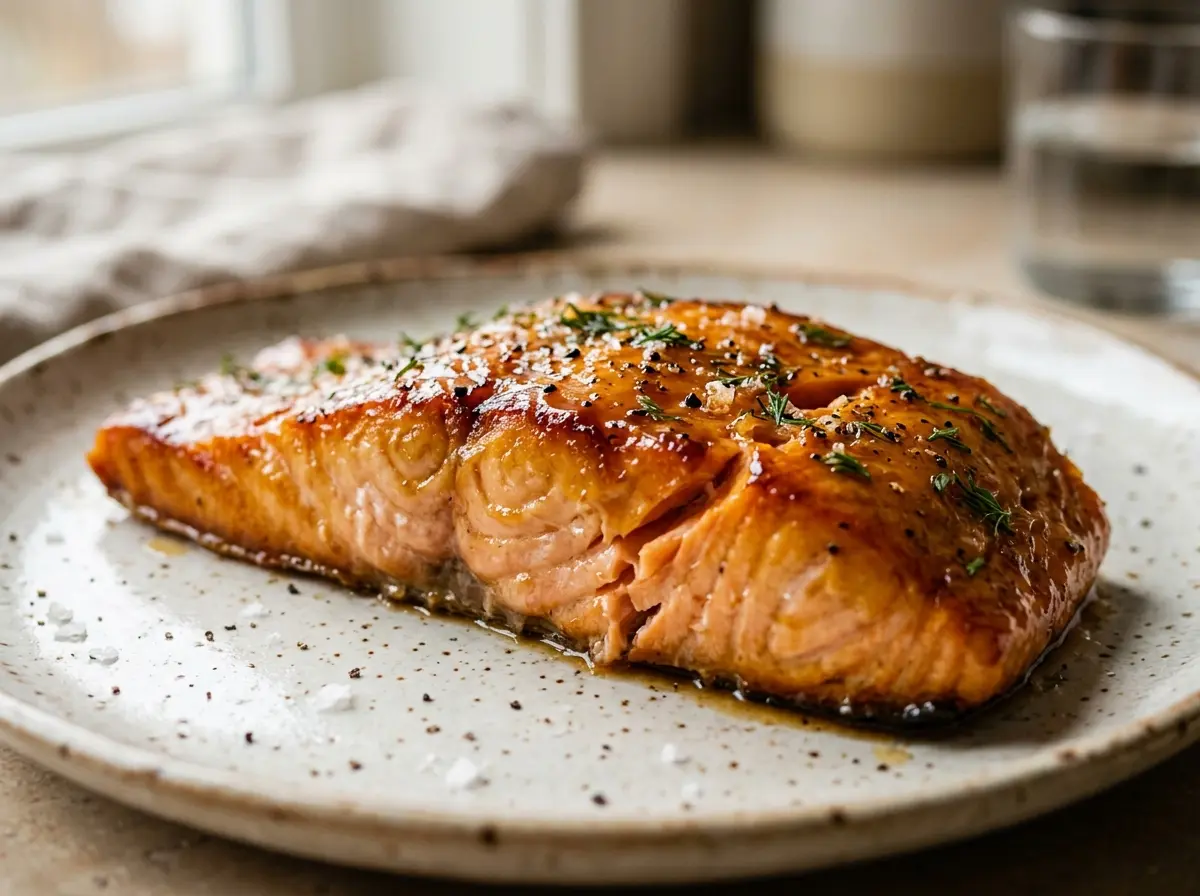
Pull the tray from the oven and spoon any remaining glaze over the top of each fillet. Let the salmon rest for three to five minutes before serving so the juices redistribute inside the fish. Serve warm with steamed rice, roasted vegetables, or a simple green salad. A little fresh parsley or thinly sliced green onion on top adds color and a fresh finish that balances the sweetness of the honey glaze beautifully.
Is It Better to Bake Salmon at 350 or 400 in the Oven
Both temperatures work, but the right choice depends on what texture you want and how much time you have.
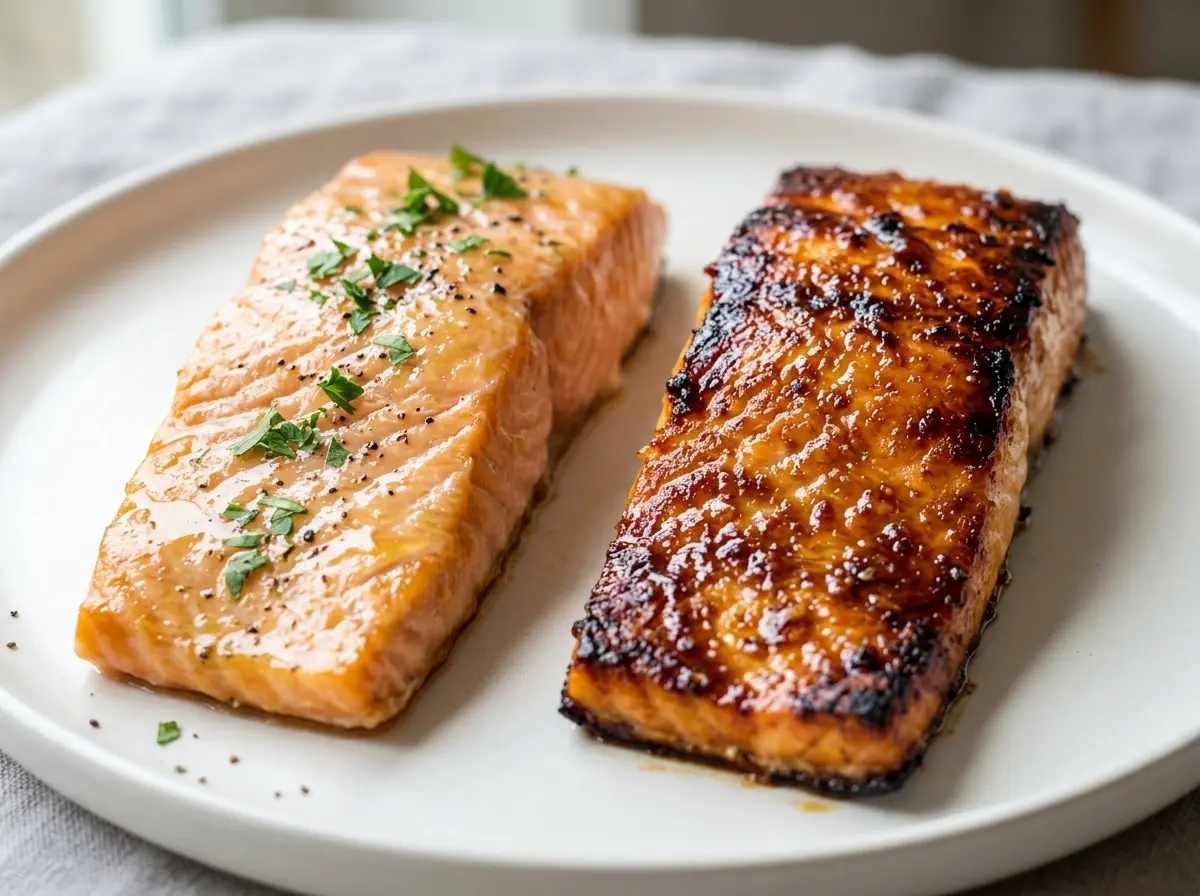
Baking at 400 degrees Fahrenheit is the better option for a honey glazed salmon recipe. At this higher temperature the salmon cooks in about 12 to 15 minutes and the honey caramelizes on the surface, giving you that golden, slightly sticky glaze. The exterior picks up a light color while the interior stays moist. This is the method used in this recipe and it produces the best result for a honey based dish.
Baking at 350 degrees Fahrenheit gives you a gentler cook. The salmon stays very soft and silky all the way through and takes about 20 to 25 minutes. This temperature is better suited to simple seasoned salmon where you want maximum tenderness without any caramelization. The drawback for a honey recipe is that 350 is not quite hot enough to fully caramelize the glaze, so you can end up with a pale surface rather than that warm golden finish.
The FDA recommends cooking fish to an internal temperature of 145 degrees Fahrenheit to ensure it is fully safe to eat. At 400 degrees, a fillet that is about one inch thick reaches this temperature in roughly 12 to 15 minutes. At 350 degrees the same fillet takes closer to 20 to 25 minutes. Either way, the thermometer is your most reliable guide.
For this salmon honey recipe oven version, 400 degrees is the answer. It gives you the best glaze, the best color, and the most satisfying result in the shortest time.
Do You Add Honey to Salmon Before or After Cooking
Honey goes on the salmon before cooking, and that timing is what makes the glaze work properly.
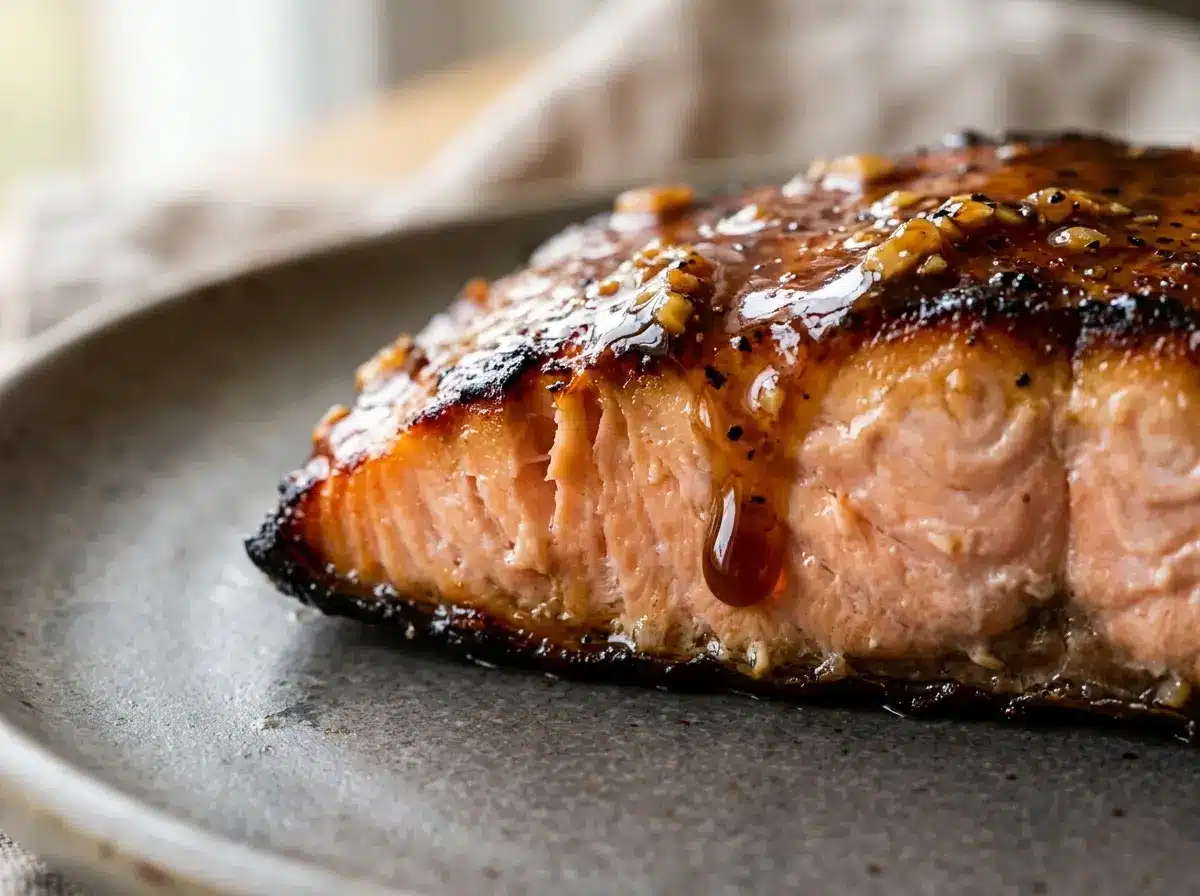
When you brush honey onto the salmon before it goes into the oven, the heat transforms the natural sugars in the honey into a caramelized coating. That process only happens with direct oven heat. If you add honey after cooking, all you get is raw honey sitting on top of cooked fish. It will taste sweet but it will not have the depth, the color, or the sticky texture that makes a honey glazed salmon so appealing.
The technique here is to coat the salmon generously with glaze before baking, then add a second thin layer in the last two minutes of cooking. The first coat caramelizes during the main bake and builds the base flavor. The second coat goes on just before the salmon comes out of the oven, which gives it a fresh, glossy finish that looks beautiful on the plate.
If you are worried the honey will burn before the salmon is cooked, keep the oven rack in the center position rather than the top rack. Honey burns faster under direct top heat. The center rack keeps the heat even and gives the glaze time to caramelize without going dark or bitter.
How to Cook Salmon for Diabetics
Salmon is one of the best protein choices for people with diabetes. The American Diabetes Association recommends eating two three-ounce servings of fatty fish per week, and salmon is one of the most nutrient-dense options available. It is rich in omega-3 fatty acids, which research has linked to reduced inflammation and better cardiovascular health, both of which are important concerns for people managing diabetes.
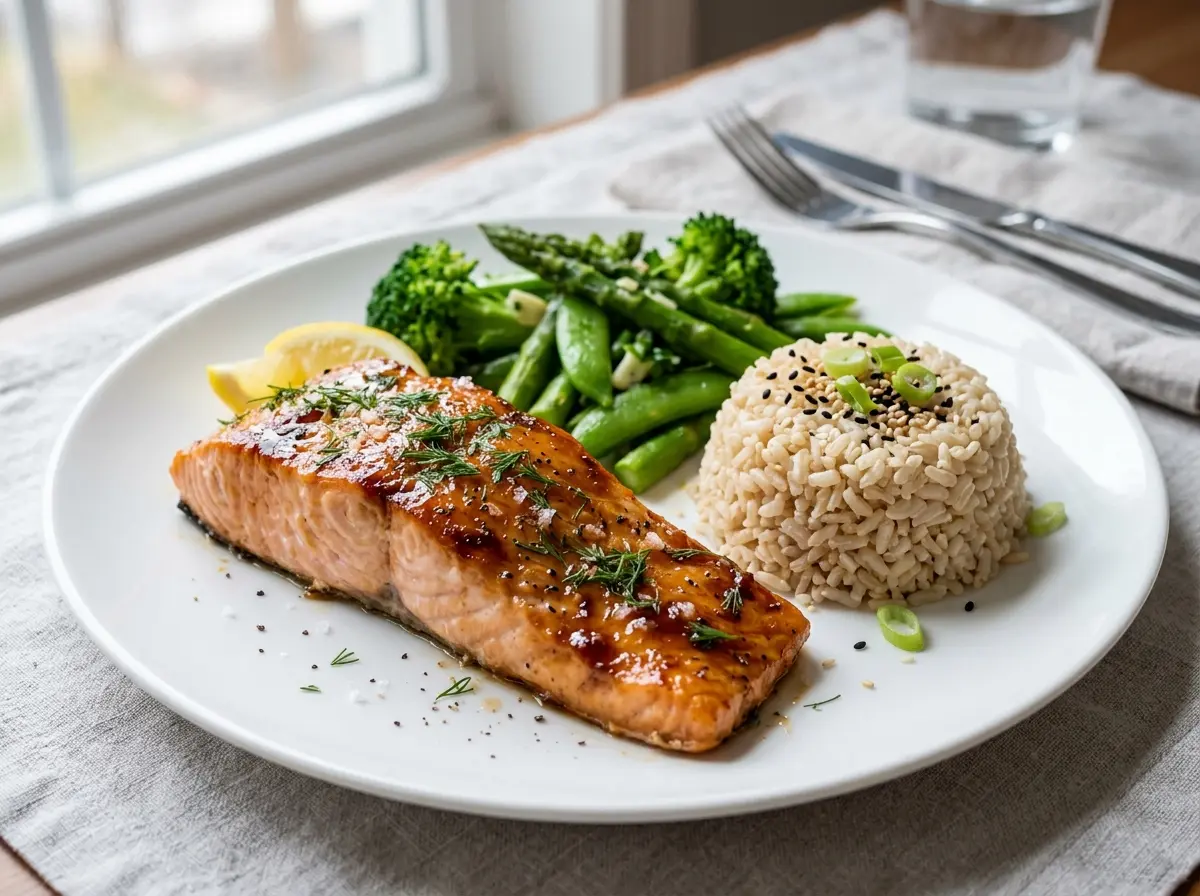
To make this salmon honey recipe oven version more suitable for diabetics, the key is to reduce the amount of honey or use a small amount alongside a lower glycemic sweetener. A full tablespoon of honey over four fillets adds only a modest amount of natural sugar per serving, and because the glaze also includes protein-rich salmon and healthy fat from olive oil, the overall glycemic impact of the meal is low compared to a high-carbohydrate dish.
The best preparation methods for diabetics are baking, grilling, and poaching rather than frying. Baked salmon in the oven is ideal because no extra fat is needed beyond the small amount of olive oil in the glaze. Keep side dishes simple too. Steamed green vegetables or cauliflower rice are better pairings than white rice or bread for managing blood sugar after the meal.
Honey contains natural sugars, so people with diabetes who need to carefully count carbohydrates should measure the honey in the glaze and adjust accordingly. One teaspoon of honey contains about 6 grams of carbohydrates, so using one tablespoon of honey spread across four fillets keeps the per-serving amount modest and manageable.
Simple Honey Glazed Salmon Baked
If you want to keep the recipe even simpler, the core version of this dish needs only three things: salmon, honey, and soy sauce. That is the stripped-down base of a simple honey glazed salmon baked at 400 degrees for 12 to 15 minutes. Everything else in the full recipe, the garlic, lemon, olive oil, mustard, is an addition that builds on that foundation. If you prefer a more minimal version, take a look at honey glazed salmon for a streamlined approach.
The simple version is useful when you are genuinely short on time or when you do not have everything in the pantry. Honey brings the sweetness and helps the glaze hold. Soy sauce brings the salt and the savory depth. Together they are all you need for a result that tastes well seasoned and complete.
From that base you can build in different directions. Add ginger for a more Asian inspired flavor. Add a pinch of chili flakes for heat. Add orange juice instead of lemon for a citrus forward glaze. The salmon honey recipe oven structure stays the same no matter which direction you take it.
Salmon with Honey and Soy Sauce in Oven
Honey and soy sauce is one of the most classic glaze pairings for baked salmon. The reason it works so well is contrast. Honey is sweet and thick. Soy sauce is salty and thin. Together they balance each other while both caramelizing in the oven heat, which is why this combination shows up in so many popular baked salmon recipes.
The ratio matters. Too much honey and the glaze is overly sweet and can burn quickly. Too much soy and the glaze is too salty and the fish can end up tasting like a marinade rather than a glaze. For four fillets, two tablespoons of honey and one tablespoon of soy sauce is the right starting balance. You can adjust slightly after tasting the raw glaze.
For a gluten free version, tamari is a direct substitute for soy sauce and works just as well in this recipe. Coconut aminos is another option if you want something slightly lower in sodium with a gentler salt level. Either swap keeps the same flavor dynamic between the honey and the soy component.
Honey Garlic Salmon Baked
Adding garlic to the honey glaze turns a simple two ingredient sauce into something with real depth and complexity. The garlic sweetens slightly as it bakes and its sharpness softens into a warm savory note that complements the honey without fighting it.
Fresh minced garlic gives the best flavor. Garlic powder works as a substitute but produces a less vibrant result. For a more intense garlic note you can roast the garlic cloves first before adding them to the glaze, which gives the sauce a deeper, slightly caramel-like flavor that pairs particularly well with wild caught salmon.
If garlic is a regular part of your cooking, this is the version of the recipe you will reach for most often. Honey garlic salmon baked at 400 degrees is a complete, satisfying dinner that needs nothing more than a simple side to round it out. You can also compare it with honey garlic salmon if you want another version to try.
What to Serve with Salmon Honey Recipe Oven
Steamed jasmine rice or brown rice is the most natural pairing because it absorbs the extra glaze that comes off the salmon during resting. The neutral flavor of the rice keeps the honey glaze as the focus of the meal.
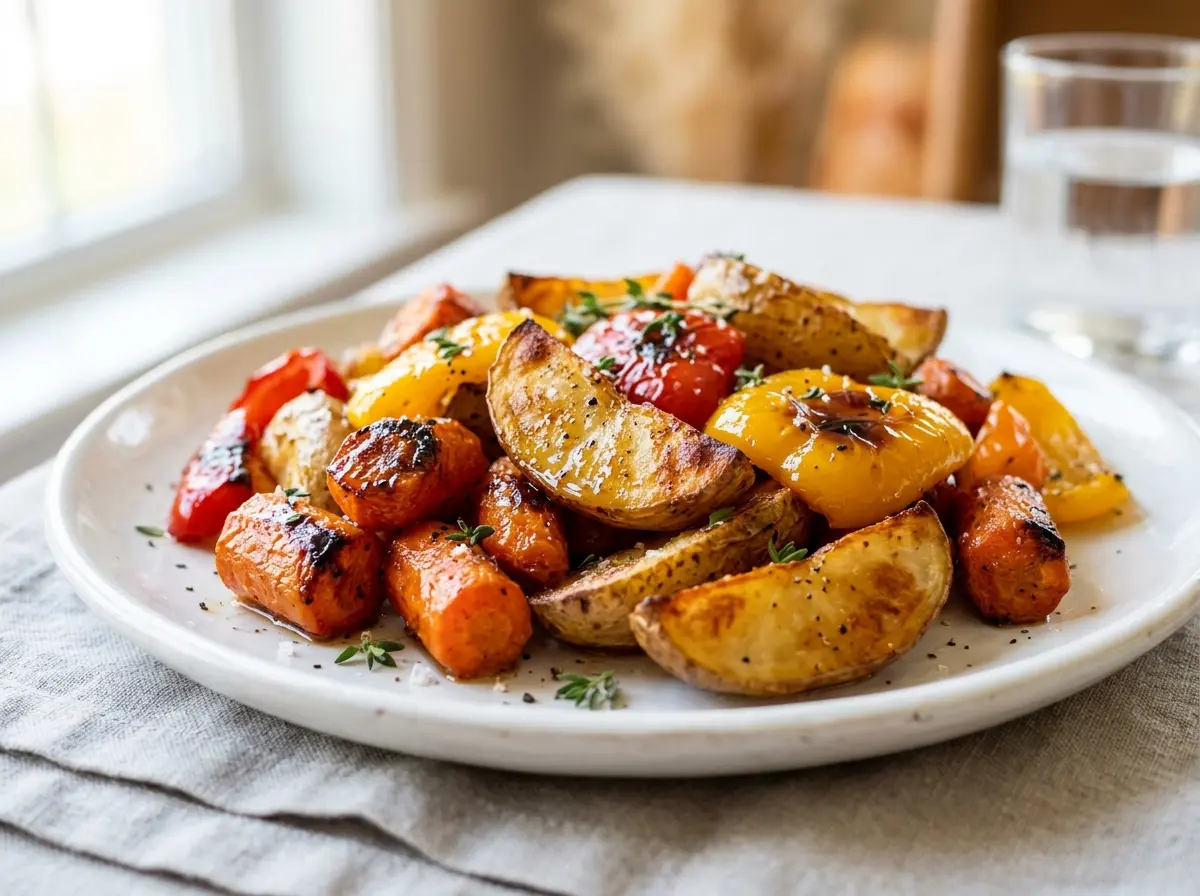
Roasted vegetables are the next best option. Broccoli, asparagus, green beans, and zucchini all work well and can be roasted on a second tray in the same oven at the same temperature while the salmon bakes. A simple green salad dressed with olive oil and lemon is the lightest side option and takes almost no time to prepare.
If you are cooking for guests, a small spoonful of the extra glaze spooned over the salmon just before it comes to the table makes a strong visual impression. The glossy honey finish looks warm and appetizing and tells the story of the recipe before anyone takes a bite.
FAQ
How to cook salmon for diabetics?
Salmon is one of the best protein choices for people with diabetes. Bake it at 400 degrees Fahrenheit with a light honey glaze using no more than one tablespoon of honey across four fillets. The American Diabetes Association recommends two three-ounce servings of fatty fish like salmon per week. Serve it with steamed vegetables or cauliflower rice instead of white rice to keep the overall meal low glycemic.
Do you add honey to salmon before or after cooking?
Honey goes on the salmon before cooking so it can caramelize in the oven heat. Brush the glaze generously over the fillets before baking, then add a thin second coat in the last two minutes. Adding honey after cooking gives you raw sweetness without the golden caramelized finish that makes a honey glazed salmon recipe so appealing.
Is it better to bake salmon at 350 or 400 in the oven?
For a honey glazed salmon recipe, 400 degrees Fahrenheit is the better choice. At 400 degrees the honey caramelizes properly and the salmon cooks in about 12 to 15 minutes with a golden, slightly sticky exterior. At 350 degrees the salmon is more tender but the glaze stays pale and the cook time extends to 20 to 25 minutes. Use a thermometer to confirm the internal temperature reaches 145 degrees Fahrenheit.
Final Thoughts
A salmon honey recipe oven dinner is one of those meals that delivers more than the effort you put in. The prep is simple. The ingredient list is short. The oven does most of the work while you set the table or finish a glass of water after a long day.
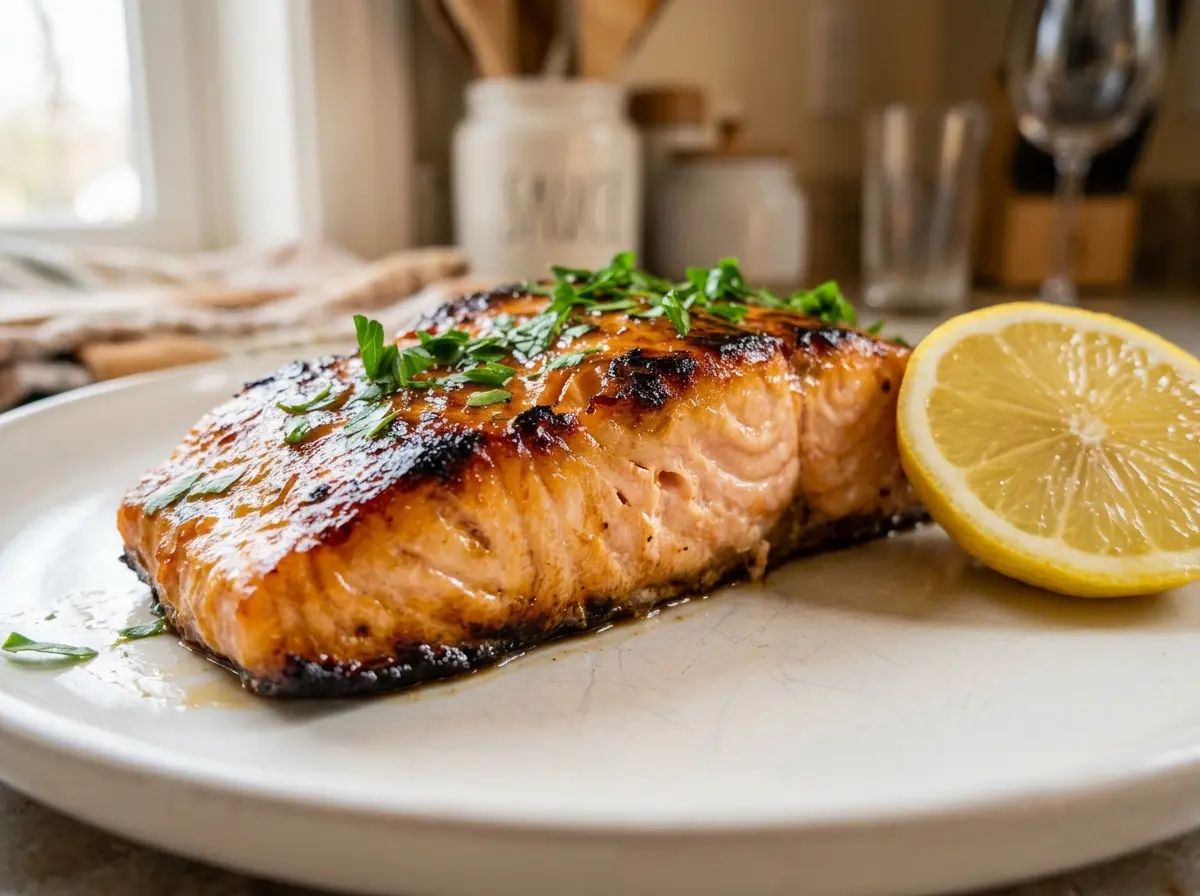
What makes it worth repeating is the honey. It transforms a plain baked fillet into something with color, sweetness, and a warm savory depth that feels considered and complete. Every time I pull this tray out of the oven I feel the same quiet satisfaction I felt the first time I made it.
That is the kind of recipe I love most. The kind that becomes part of your regular rotation without you even deciding to add it. You just keep making it because it keeps working.
USDA Nutrient Content in Salmon
Wild Alaska Seafood Nutrition Information
USDA AgResearch Seafood Benefits
Honey and Nutritional Disclaimer
The content on HoneyGlowKitchen.com is for informational and inspirational purposes only and does not constitute medical or nutritional advice. Honey should not be given to infants under 12 months. Nutritional values are estimates only. Always consult a healthcare professional for dietary guidance specific to your needs.
Salmon Honey Recipe Oven
Salmon honey recipe oven made simple with tender salmon, honey, soy sauce, and garlic. A cozy baked dinner with easy prep and rich flavor.
- Prep Time: 10 minutes
- Cook Time: 15 minutes
- Total Time: 25 minutes
- Yield: 4 servings
- Category: Healthy Comfort
- Method: Bake
- Cuisine: American, Healthy Comfort
Ingredients
4 salmon fillets
2 tablespoons honey
1 tablespoon soy sauce
1 tablespoon olive oil
2 cloves garlic, minced
1 teaspoon lemon juice
1 quarter teaspoon black pepper
1 pinch salt
Instructions
1. Preheat the oven to 400 degrees Fahrenheit.
2. Mix honey, soy sauce, olive oil, garlic, lemon juice, salt, and pepper.
3. Place salmon fillets on a lined baking tray.
4. Brush the glaze over the salmon and bake until flaky.
5. Serve warm with vegetables or rice.
Notes
Bake the salmon until it flakes easily with a fork.
A little extra glaze can be spooned over before serving.
For a lighter meal, pair it with steamed greens or a simple salad.
Nutrition
- Serving Size: 1 fillet
- Calories: 280
- Sugar: 9g
- Sodium: 420mg
- Fat: 14g
- Saturated Fat: 2g
- Unsaturated Fat: 10g
- Trans Fat: 0g
- Carbohydrates: 10g
- Fiber: 0g
- Protein: 28g
- Cholesterol: 95mg