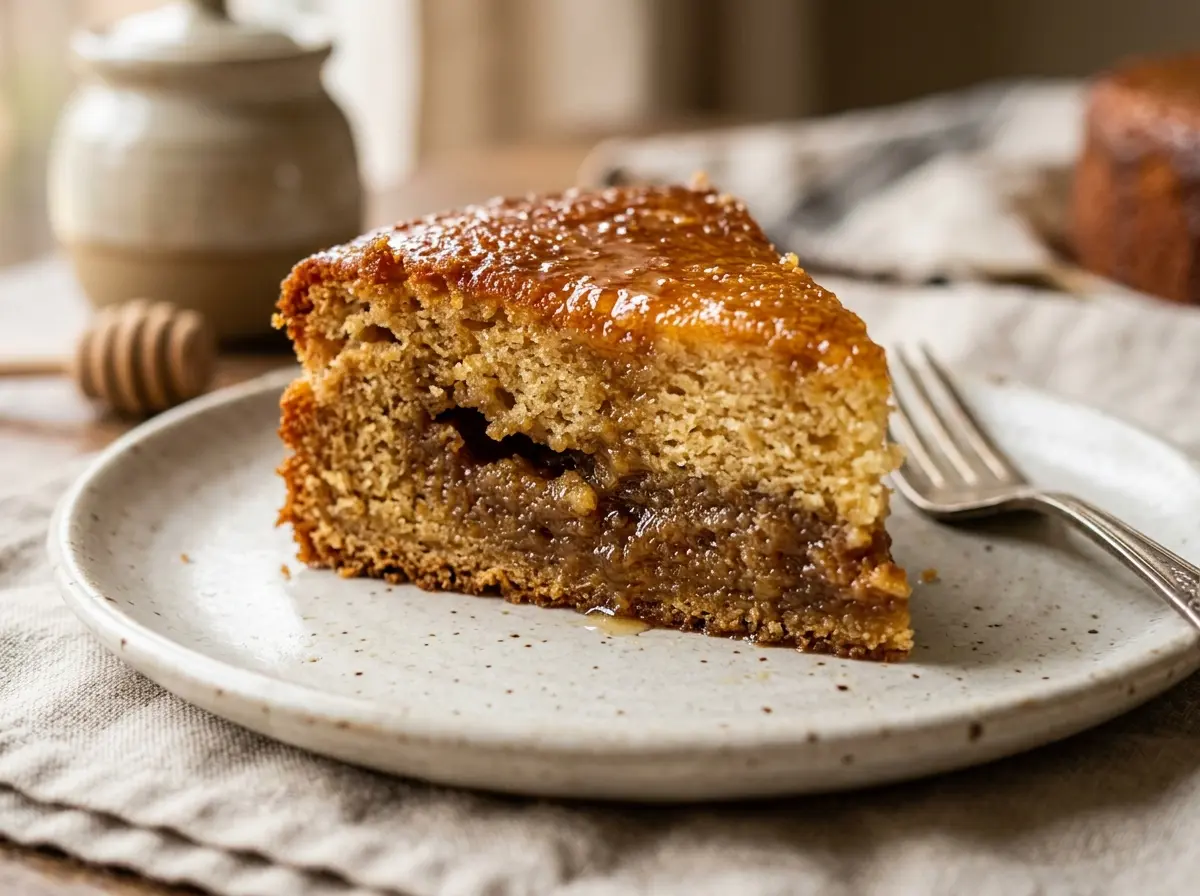
The sunken honey cake whipped egg whites method sounds like it should fail. You whip a mountain of egg whites into stiff, glossy peaks, fold them so carefully into a honey batter, then watch the whole thing collapse in the oven on purpose. That deliberate sink is not a mistake, it is the entire point, and it is what gives this cake its soft, almost custard-like center instead of a dry, uniform crumb.
I am Bella, and I share honey recipes here on HoneyGlowKitchen.com because I love recipes that turn a simple ingredient into something worth talking about. This particular cake traces back to chef Edoardo Pellicano of Mao’s, a restaurant awarded one star in the MICHELIN Guide Great Britain and Ireland, and it has since become a favorite among home bakers who want restaurant-level technique without restaurant-level difficulty.
By the end of this article you will understand exactly why the sunken honey cake whipped egg whites technique works, how to execute each fold and bake stage without deflating your batter, and how to fix the most common mistakes that turn this cake dense instead of airy. If you enjoy baking with honey, take a look at my honey oats recipe for another naturally sweetened option that skips refined sugar entirely.
Table of Contents
Table of Contents
Key Takeaways
- The sunken honey cake whipped egg whites method relies on stiffly whipped meringue folded gently into a honey and yolk base.
- This cake, created by Michelin-starred chef Edoardo Pellicano, is meant to sink slightly and stay soft in the center.
- Cooling honey to around body temperature before mixing with egg yolks prevents the eggs from curdling.
- Folding, not stirring, keeps the air bubbles from the whipped egg whites intact through the whole process.
- A slight wobble in the center when you check the cake is exactly what you want, not a sign it needs more time.
What Is Sunken Honey Cake?
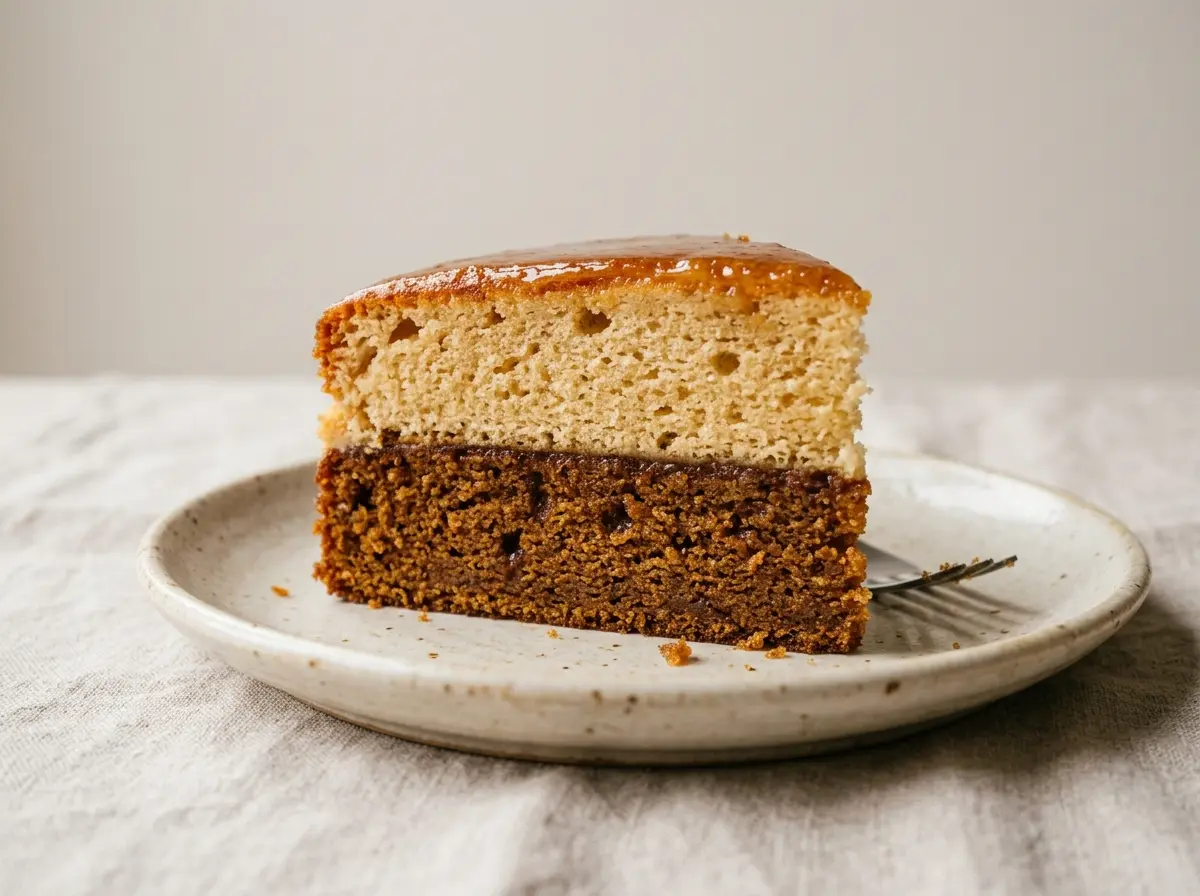
Sunken honey cake is a light, airy dessert built almost entirely on the structure whipped egg whites provide, rather than on flour or leavening agents like baking powder. The cake rises dramatically in the oven as the trapped air in the meringue expands, then deliberately collapses slightly as it cools, leaving a dense, fudgy layer at the base topped by a lighter, souffle-like crumb. This intentional sink is why the dessert has earned its name and why it looks so different from a standard layer cake.
The Origin of This Recipe
This exact sunken honey cake whipped egg whites recipe was developed by chef Edoardo Pellicano, whose restaurant Mao’s received one star in the MICHELIN Guide Great Britain and Ireland in 2021. The official MICHELIN Guide account shared the technique directly from Pellicano, which is part of why home bakers trust the method rather than treating it as another unverified internet trend. The recipe has since been adapted by food bloggers and home cooks, but the core steps, cooled honey, stiffly whipped whites, and a deliberately short bake, remain the same across every credible version.
Ingredients for Sunken Honey Cake (US Measurements)
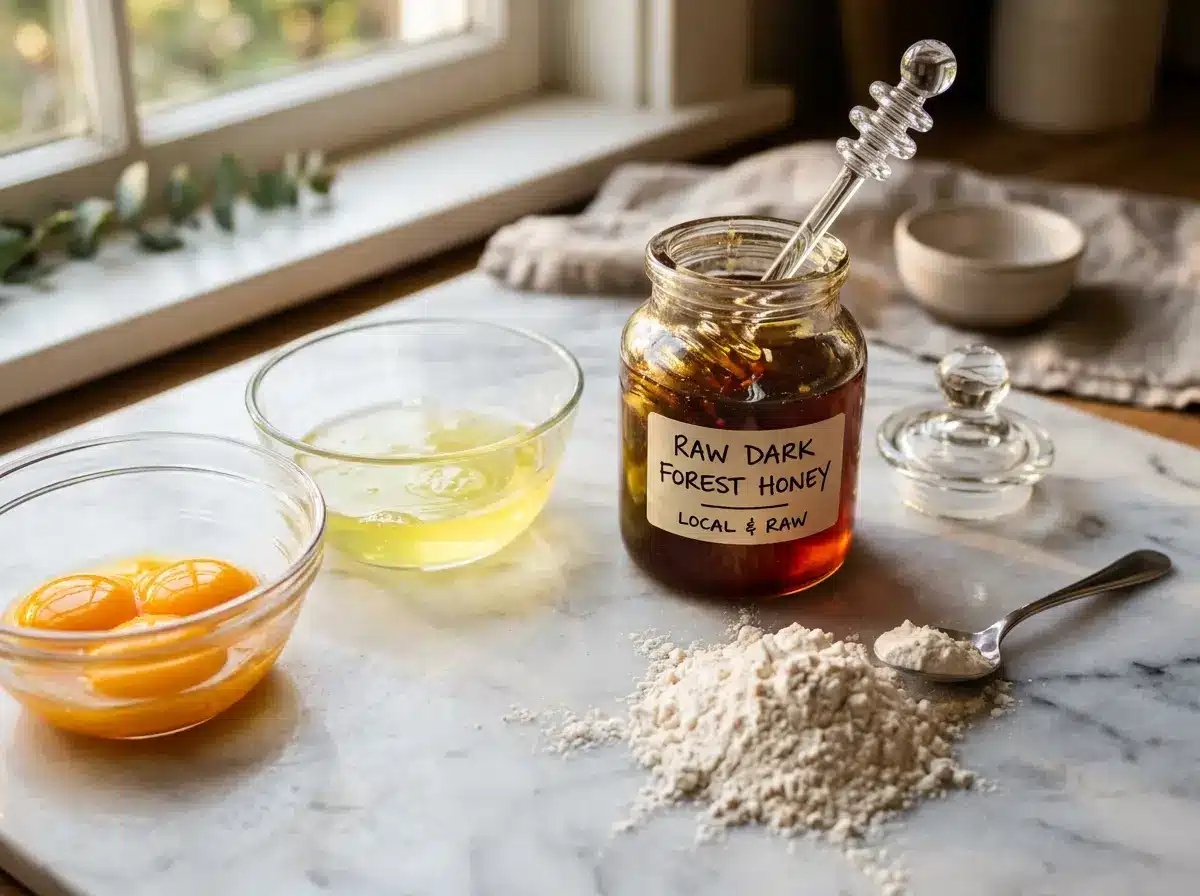
- 4 to 5 large egg yolks (about 130g)
- 12 large egg whites
- 2 tablespoons powdered sugar
- 1/2 cup honey, a stronger flavored variety like heather or dark honey works best
- 1/2 cup all-purpose flour
- Optional: 1 tablespoon whisky, for flambeing at the end
The unusually high ratio of egg whites to flour is what defines this cake. Most standard sponge cakes rely heavily on flour and leavening for structure, but this recipe uses almost none, letting the whipped egg whites do nearly all the structural work.
How to Make Sunken Honey Cake Whipped Egg Whites Step by Step
Step 1: Warm and cool the honey
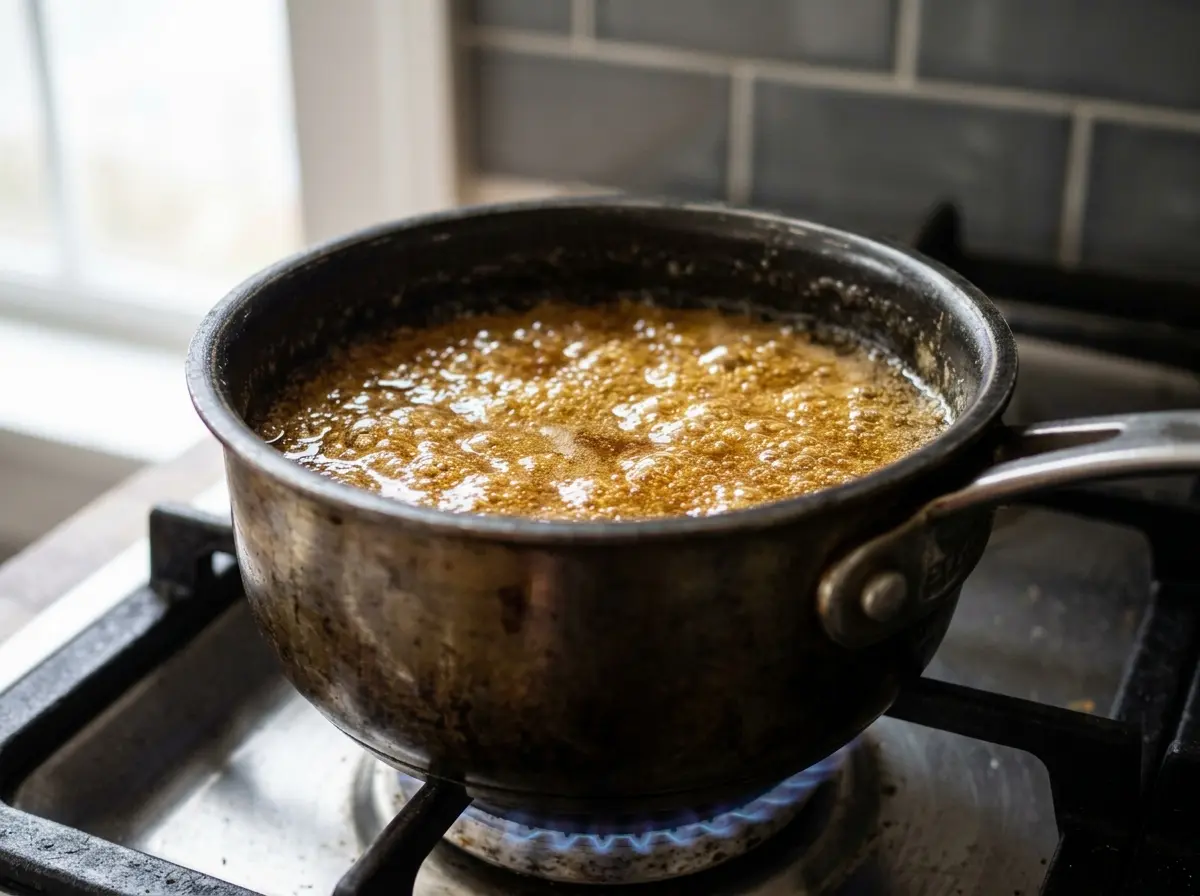
Heat the honey in a small pot until it reaches a gentle simmer, then hold it there for about two minutes before removing it from the heat. Let the honey cool naturally to roughly body temperature, around 100°F, before moving to the next step, since honey that is too hot will cook the egg yolks and create a lumpy, curdled batter instead of a smooth one.
Step 2: Whip the egg whites to stiff peaks
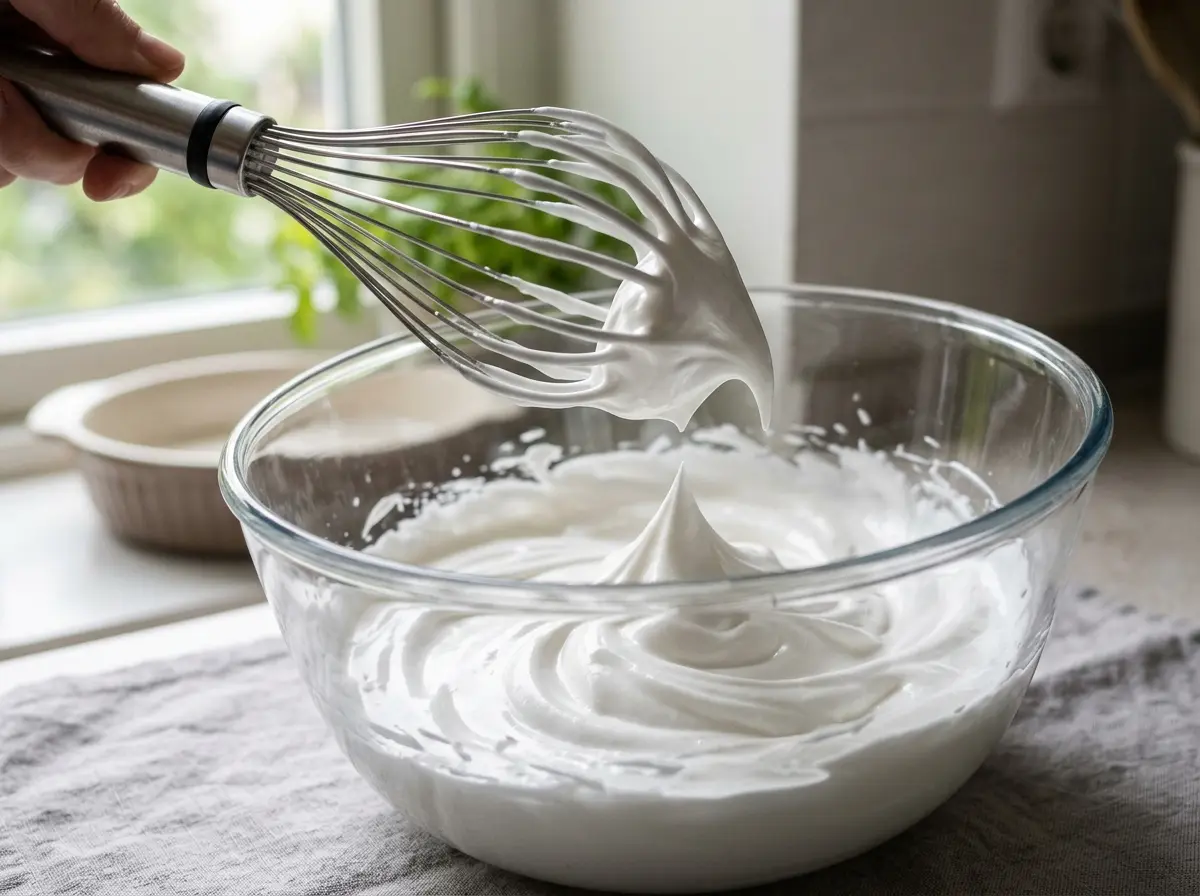
Sift the powdered sugar directly into the egg whites, then whisk with a hand mixer or stand mixer until stiff, glossy peaks form. Sifting the sugar rather than dumping it in helps prevent sugar crystals from puncturing the air bubbles you are trying to build, which can quietly deflate your meringue before it even reaches the batter.
Step 3: Whisk the yolks with the cooled honey
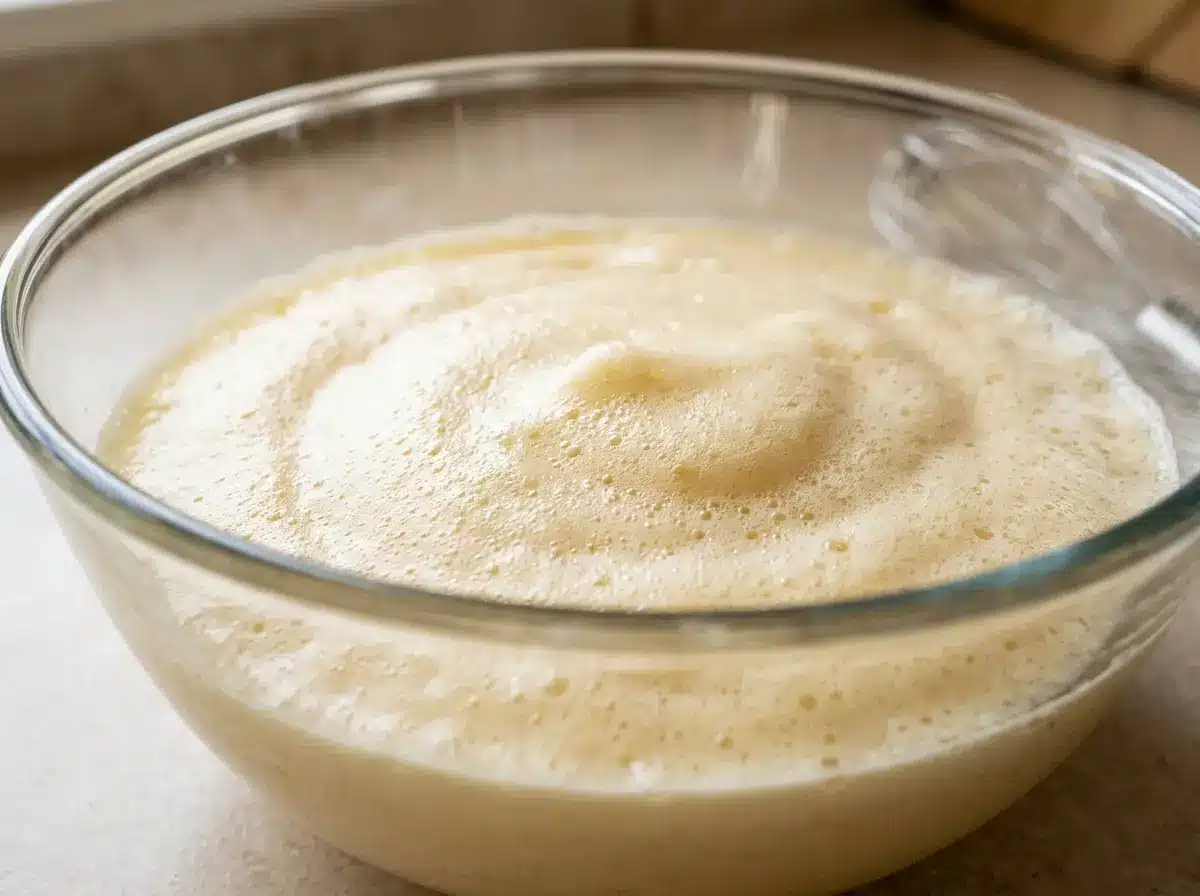
In a separate bowl, whisk the egg yolks together with the cooled honey until the mixture turns pale, frothy, and at least doubles in volume. This step should take a few minutes of steady whisking, and the mixture will look noticeably lighter in color once it is ready.
Step 4: Fold in the egg whites
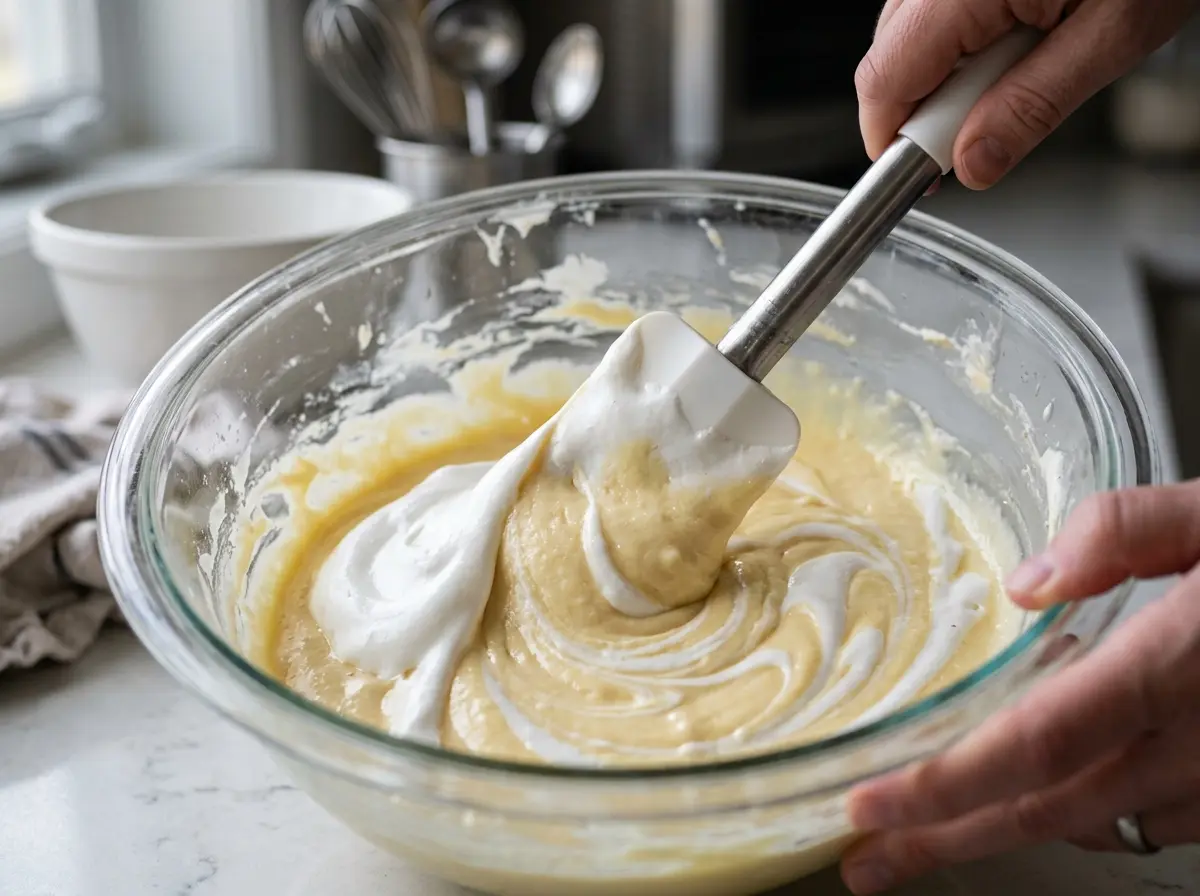
Add half of the whipped egg whites to the yolk and honey mixture, folding gently with a spatula rather than stirring or beating. Once fully incorporated, add the remaining half and fold again just until combined, working carefully to avoid deflating the air you just worked to build.
Step 5: Sift and fold in the flour
Sift the flour directly over the batter, then fold it in by hand until just dispersed, taking care not to overwork the mixture. Overmixing at this stage is one of the most common reasons a sunken honey cake whipped egg whites recipe turns out dense instead of airy.
Step 6: Prepare the pan and pour
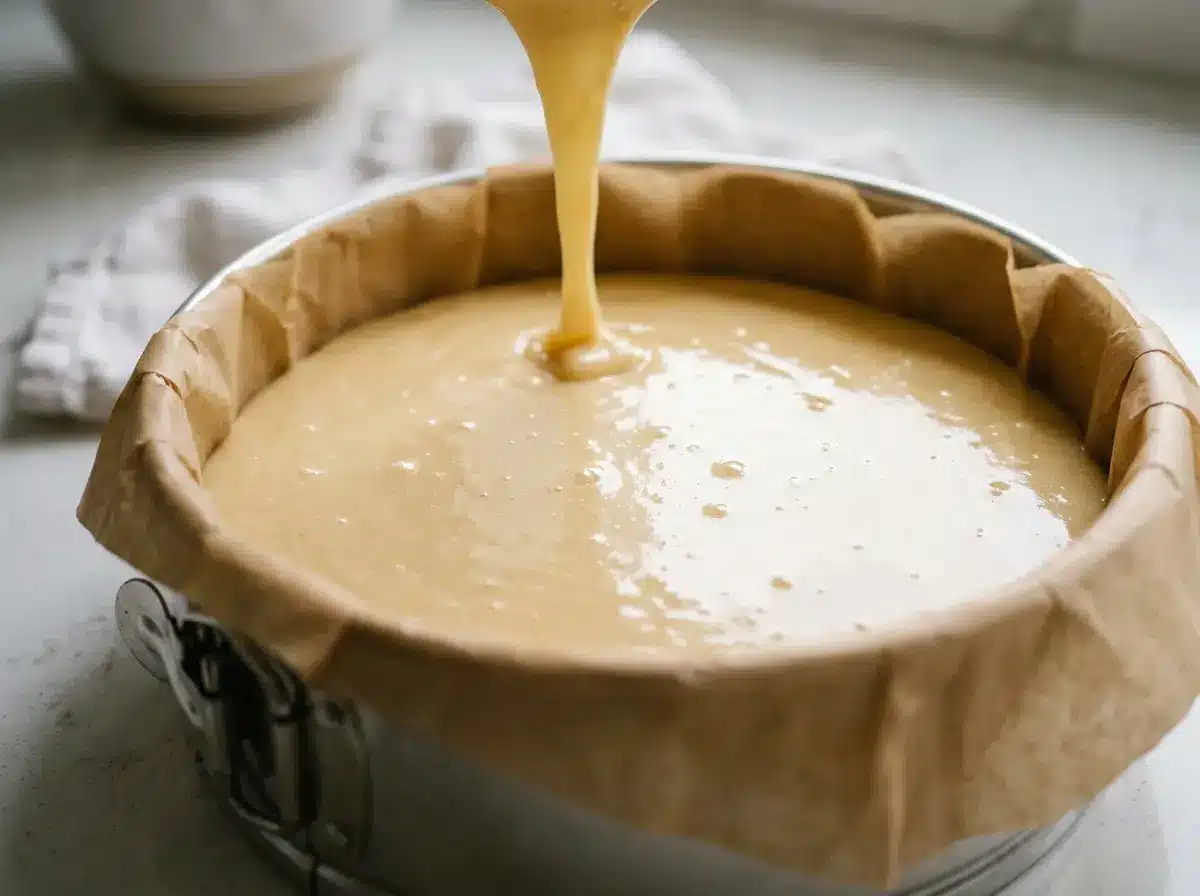
Line a springform pan, ideally 7 to 10 inches in diameter, with parchment paper and a light coating of nonstick spray. Pour in the batter, filling the pan to about half an inch below the rim, since the cake will rise significantly during baking due to steam expansion.
Step 7: Tap and bake
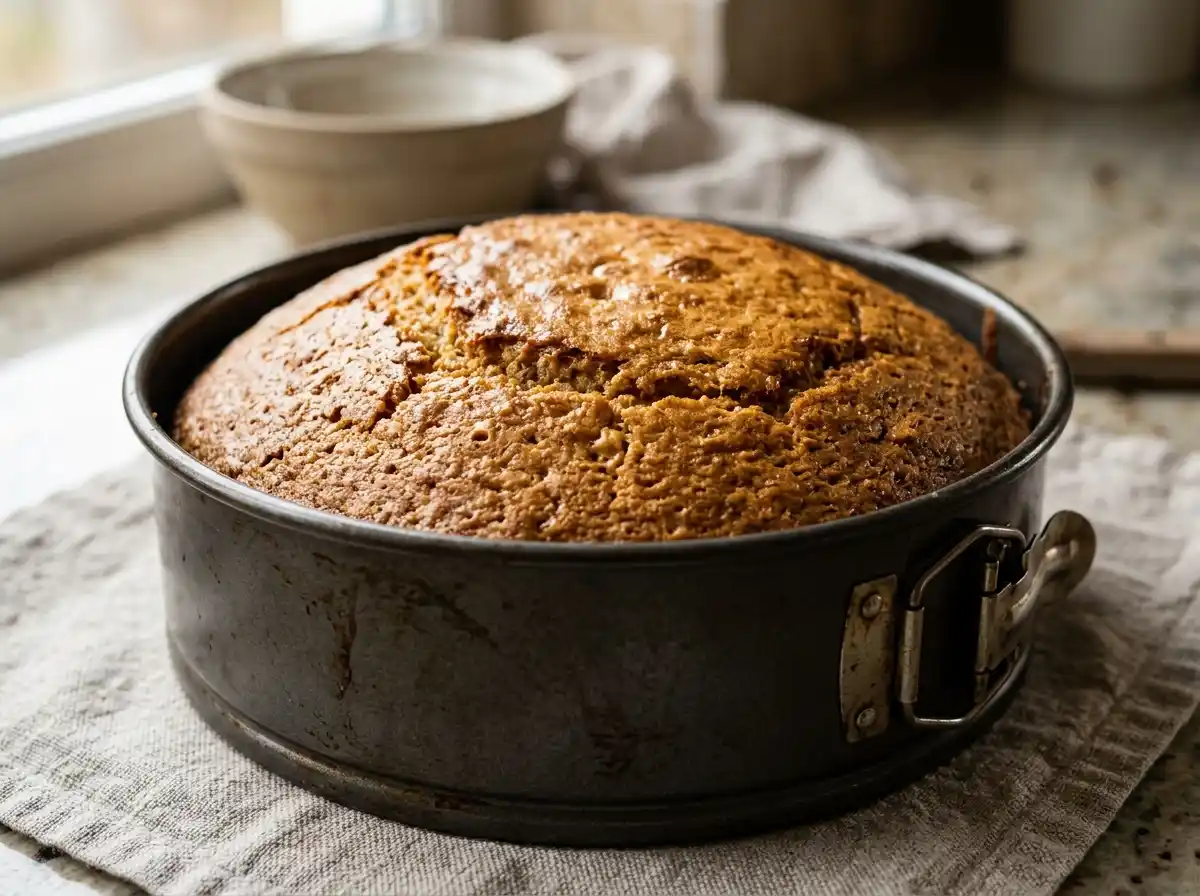
Tap the filled pan on the counter three or four times to release any large air bubbles that could create uneven tunnels in the finished cake. Bake at 350°F for 15 to 25 minutes, watching for a golden top with a slight jiggle remaining in the center rather than a fully set, firm surface.
Step 8: Cool briefly and serve
Release the springform ring, slide the cake onto a wire rack using the parchment paper to support it, and let it cool for about 8 to 10 minutes before slicing. The cake is meant to be served while still warm and slightly runny in the center, which is when the texture contrast between the airy top and fudgy base is most noticeable.
Why the Egg Whites Matter So Much
The entire structure of a sunken honey cake whipped egg whites recipe depends on how much air gets trapped during whipping and how much of that air survives the folding process. Egg whites can trap a significant volume of air when whipped correctly, and that trapped air is what causes the dramatic rise in the oven. When the cake cools and the air bubbles naturally contract, the center sinks slightly, creating the soft, almost custard-like texture that defines this dessert rather than a uniform, dry crumb throughout.
Temperature control plays a bigger role here than in most cake recipes. Cooling the honey to around 100°F before combining it with the yolks prevents the eggs from cooking prematurely, since egg proteins begin to coagulate at higher temperatures and would otherwise create a lumpy, uneven batter.
Common Mistakes and How to Fix Them
| Mistake | Why It Happens | Fix |
|---|---|---|
| Cake comes out dense, not airy | Egg whites under-whipped or batter overfolded | Whip to stiff, glossy peaks and fold gently, stopping as soon as combined |
| Batter looks curdled or lumpy | Honey was too hot when mixed with yolks | Cool honey to about 100°F before combining with egg yolks |
| Cake has tunnels or uneven holes | Large air bubbles trapped in the batter | Tap the filled pan on the counter 3 to 4 times before baking |
| Center overcooked, no wobble | Baked too long or oven opened during baking | Check at 15 minutes and avoid opening the oven door early |
Serving and Storage Tips
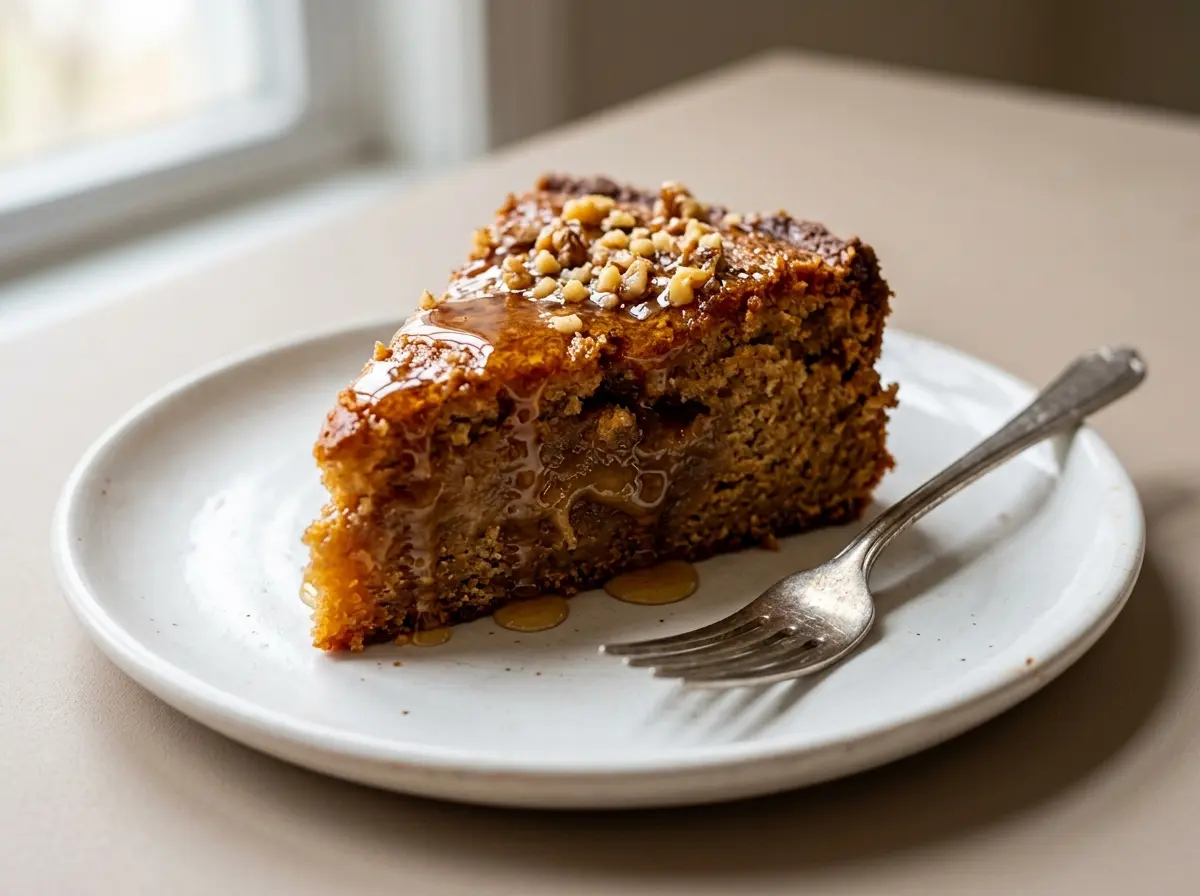
This cake is at its best the day it is made, ideally served warm shortly after the brief cooling period, since the contrast between the soft center and lightly set top loses some of its charm once fully chilled. If you want to add a finishing touch similar to the original chef’s presentation, a small amount of whisky poured over the top and briefly flambeed adds both flavor and a bit of dramatic presentation at the table. For another simple honey dessert to round out a baking session, my honey banana Thai dessert recipe offers a completely different texture with the same natural sweetness.
5 Mistakes to Avoid With This Recipe
- Using cold eggs straight from the fridge. Room temperature eggs whip to a more stable meringue than cold ones.
- Skipping the sifted sugar step. Sugar crystals that are not sifted can puncture air bubbles and reduce your meringue’s volume noticeably.
- Opening the oven door early. This lets heat escape and can affect how evenly the cake rises.
- Overfilling the pan. Since the cake rises significantly, filling past half an inch below the rim risks overflow.
- Slicing the cake too soon after it comes out of the oven. Give it the full cooling window so it holds together when cut.
FAQ About Sunken Honey Cake Whipped Egg Whites
Why does sunken honey cake sink in the middle?
The cake sinks because its structure depends almost entirely on whipped egg whites rather than flour or baking powder. As the cake cools after baking, the trapped air bubbles naturally contract, causing the center to collapse slightly into a soft, dense layer. This sinking is intentional and is what gives the cake its signature texture rather than being a sign of a failed bake.
Can I use a hand whisk instead of a mixer?
Whipping 12 egg whites to stiff peaks by hand is possible but takes considerably longer and more effort than using a hand mixer or stand mixer. A mixer produces more consistent, stable peaks with less risk of under-whipping. If working by hand, be prepared to whisk continuously for several minutes to reach the right consistency.
What type of honey works best in this recipe?
Darker, more strongly flavored honey varieties like heather honey tend to give the cake a deeper, more complex flavor than a mild, light honey. That said, any honey you have on hand will work, since the technique matters more than the specific variety used. A milder honey will simply produce a subtler overall flavor.
Can I make this cake ahead of time?
This cake is best enjoyed the day it is made, ideally warm, since its soft center and airy top are most noticeable shortly after baking. Refrigerating it will firm up the texture significantly and change the eating experience from the original intent. If you must store leftovers, keep them covered in the refrigerator and expect a denser texture upon reheating.
Is this the same as a Japanese soufflé cheesecake?
Sunken honey cake and Japanese soufflé cheesecake share some techniques, including whipped egg whites folded into a base, but they are distinct desserts with different ingredients and origins. This particular recipe comes from chef Edoardo Pellicano of Mao’s, a Michelin-starred restaurant, and relies on honey rather than cream cheese as its defining flavor. The similarities come from shared baking science rather than a shared recipe lineage.
Why did my meringue deflate before I could fold it in?
Meringue can deflate if it sits too long before being incorporated into the batter, or if it was slightly under-whipped to begin with. Working quickly once the egg whites reach stiff peaks, and folding rather than stirring, helps preserve as much volume as possible. Preparing your other components in advance so the meringue is used almost immediately after whipping also helps.
Conclusion
Mastering the sunken honey cake whipped egg whites technique comes down to patience during the folding stage and trust in the process when the center still looks slightly underdone. Once you see how dramatically the cake rises and then settles into its signature sunken shape, the method starts to feel less intimidating and more like a fun kitchen experiment worth repeating. If you enjoyed this recipe, browse my full collection of honey recipes for more ways to bake and cook with honey.
The content on HoneyGlowKitchen.com is for informational and inspirational purposes only and does not constitute medical or nutritional advice. Honey should not be given to infants under 12 months. This recipe contains raw egg-adjacent preparation risk if undercooked; ensure eggs are fresh and from a reputable source. Always consult a healthcare professional for dietary guidance specific to your needs.